
By Amy Nowlin
Coastal and Marine Resources Matagorda County Texas A&M AgriLife Extension | Texas Sea Grant
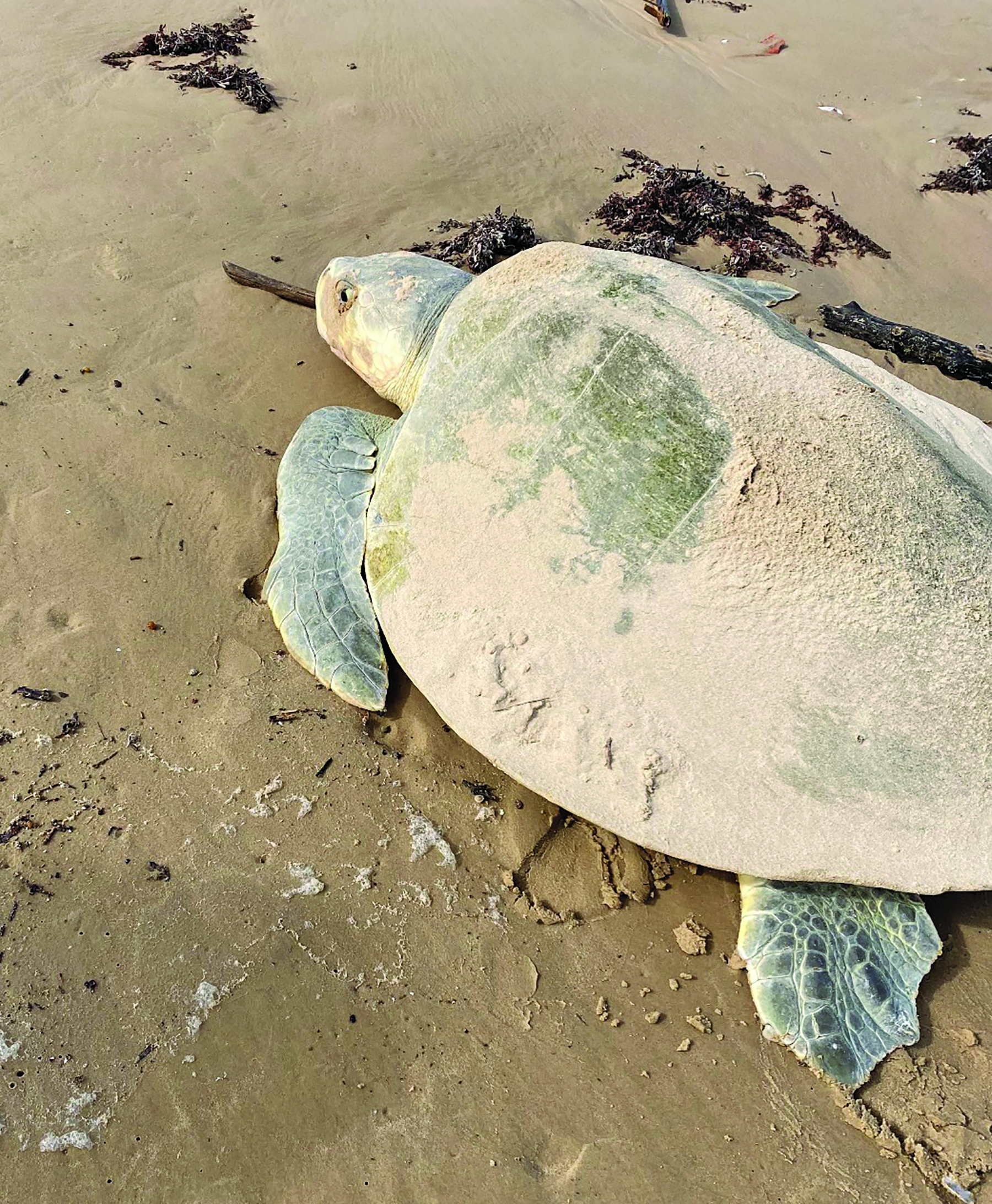
As warmer temperatures arrive along the Texas coast, sea turtle nesting season is officially underway bringing with it a dedicated network of trained volunteers working to protect one of the Gulf’s most iconic marine species.
Five species of sea turtles inhabit Texas waters: the Kemp’s Ridley, (designated as the State Sea Turtle), Loggerhead, Green, Hawksbill, and Leatherback, each playing an important role in maintaining healthy coastal and marine ecosystems.
Sea turtle nesting season in Texas typically runs from April through July, though activity can begin as early as late March and extend into August depending on conditions. The peak of nesting - especially for the critically endangered Kemp’s Ridley sea turtle - occurs between April and June, when most nesting activity is recorded along the coast.
In 2025, the number of Kemp’s ridley sea turtle nests documented along the Texas coast reached 357 - surpassing the previous annual record of 353 set in 2017.
This milestone marks a significant achievement in conservation efforts, especially considering that systematic tracking of sea turtle nests in Texas began in 1980.
From early spring through mid-summer, female sea turtles come ashore under the cover of darkness to lay their eggs along sandy beaches.
Because these nests are often difficult to spot and vulnerable to threats, trained sea turtle patrollers are essential to conservation efforts.
Each morning at sunrise, patrollers walk designated stretches of beach searching for turtle tracks - distinctive markings left behind in the sand that resemble wide, symmetrical trails.
These tracks help volunteers identify nesting activity, even when the nest itself is hidden.
Once discovered, nests may be carefully marked, monitored, or relocated to safer areas to protect them from flooding, predators, and human disturbance.
Importantly, these volunteers must complete specialized training and be listed under a federal permit issued through the U.S. Fish and Wildlife Service.
This permit authorizes them to legally handle protected species and carry out conservation actions such as documenting nesting activity, marking or relocating nests, and responding to stranded or injured turtles.
Two sea turtle nests were documented north of Sargent Beach, and one nest was recorded on the Matagorda Peninsula during the 2025 nesting season.
Officials remind beachgoers to stay vigilant during nesting season: avoid disturbing marked areas, fill in holes, remove beach gear at the end of the day, and keep lights off at night, as artificial lighting can disorient both nesting turtles and hatchlings.
Anyone who encounters a sea turtle - whether nesting, stranded, or injured - is urged to report it immediately by calling 1-866-TURTLE-5 (1-866-887-8535).
Quick reporting helps trained responders act and improves the chances of survival.
Anyone interested in volunteering can reach out to the Sea Aggie Sea Turtle Patrol within Texas A&M-Galveston for more information.
With continued public awareness and properly trained volunteers, Texas beaches are becoming safer havens for sea turtles - one set of tracks at a time.