Sugar Valley is a widely dispersed rural community along Caney Creek and on Texas 35 eight miles northeast of Bay City in northeastern Matagorda County.
In the early 1900s a railroad stop called Sugar Valley was located on the New York, Texas and Mexican line between the stops of Ashwood and Grovedale, a few miles north of the present Sugar Valley site.
By at least 1896 there were settlers on a sugar plantation at a place called Sugar Valley.
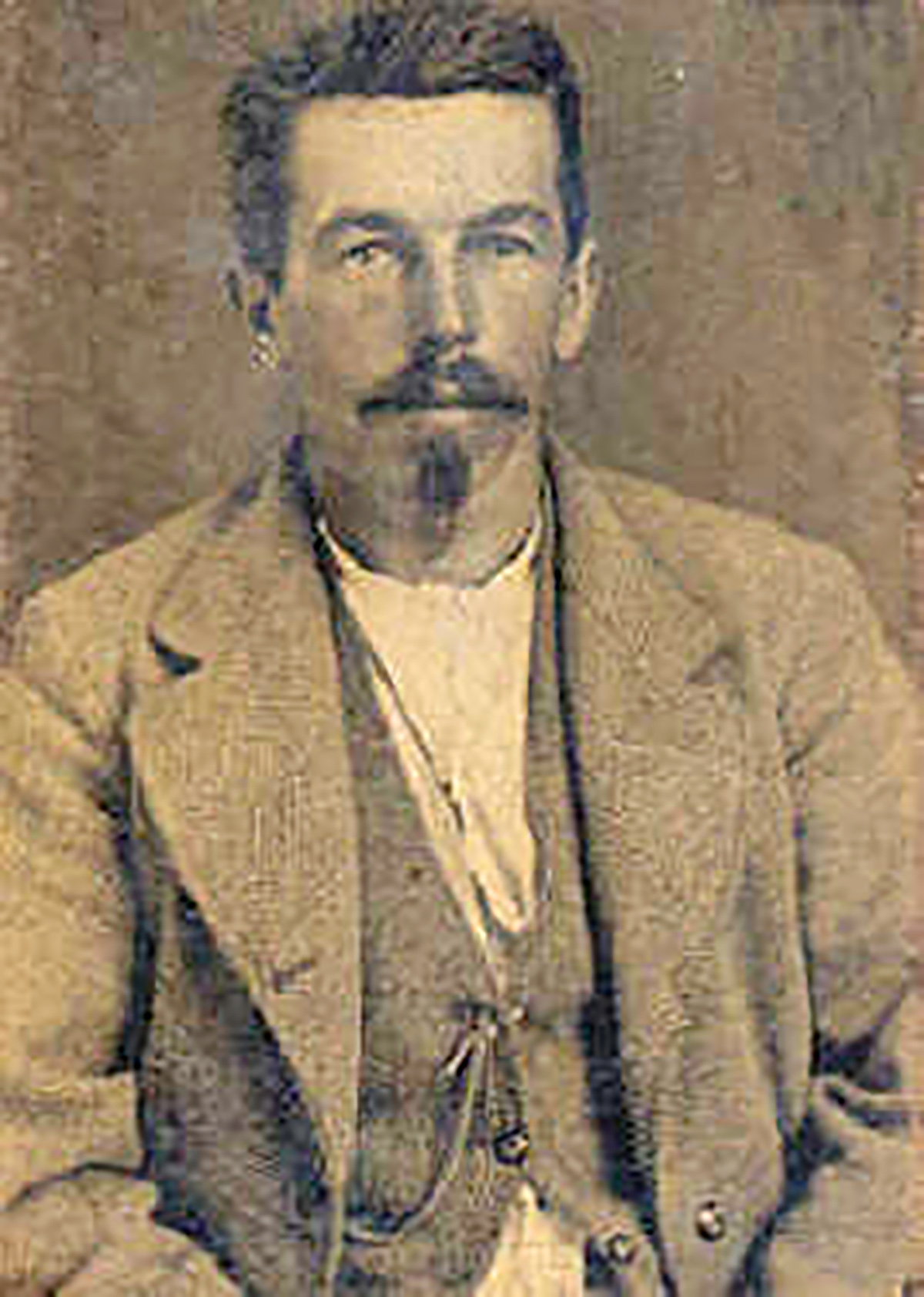
George Robert Brown, an immigrant from Bavaria, Germany, settled in the Caney Creek area because of its rich bottomlands and built the brick sugar mill from which the community took its name.
The mill operated from 1904 to 1922 and produced an average of 600 gallons of syrup a day, which it shipped by rail to the sugar factory at Sugar Land in Fort Bend County.
Sugar Valley had a population between fifty and 100 in 1913.
In 1984 the Sugar Valley 4-H club was one of nineteen active in the county.
No population figures are available, but the 1989 county highway map showed Sugar Valley with one business.
In 2000 the population was thirty-five.
Mr. G. R. Brown came to the United States from his native country Bavaria, Germany, at age 21 in March 1868.
He left his native country to avoid serving in the German army.
He felt that the compulsory service was not right and felt he could live his life better in America.
Landing in New York, he soon moved south to New Orleans, Louisiana, where he worked in the vast sugar mills and acquainted himself with the sugar industry.
Drifting to Texas, he arrived in Columbus, Texas, in Colorado County, where he acquired his United States citizenship papers on September 13, 1871.
While in Columbus he met and married his wife, Miss Mary Ellen McWilliams, in 1872.
She was a native of Hannibal, Missouri. When Mr. Brown received his citizenship papers, he asked and had his original (birth) name Von Braun changed to Brown. Braun in German means Brown in English.
After his marriage he moved to Matagorda County.
During his first years in Matagorda County, he lived in Pledger, Texas and served as Matagorda County Commissioner.
He served in this office and was also Postmaster in Pledger while living there, when Matagorda, Texas was still the county seat.
After his term expired he bought 200 acres of land in Sugar Valley from Dr. J.W. Brown (no relation).
They built their home under the large oak trees just across county road 1728 from where Walter Brown’s home is located.
Mr. Brown’s grandson, W. A. Brown, son of Walter and Reba Brown, has his home there now.
The land is along Caney Creek, which had received its name from the endless cane brakes along the creek.
It was here that he began his life as an American citizen in 1896.
Mr. and Mrs. G. R. Brown had six children: Theodore Brown, born June 25, 1873; Raymond Brown, born July 18, 1875; Beulah Brown born November 1, 1878; Lizzie Brown, born August 25, 1881; Walter Alfred Brown, born June 2, 1884; and Mary Brown, born March 3, 1888.
Mr. G. R. Brown, Sr. was an architect and worked for Anderson Clayton cotton company for a number of years.
He was an inventor and obtained a patent for several inventions, among them being a press for round bales of cotton, made like a roll of paper; a percentage scale and a poison for leaf worms on cotton.
Mr. Brown and his eldest son, Theodore, began collecting machinery with the hope of opening a sugar syrup mill.
The brick for the buildings came from the Bouldin plantation on Caney Creek just left of the “S” curve between Sugar Valley and Van Vleck on Texas 35.
By 1904 the mill was ready for operation.
The mill had been in operation only a few years when in 1909 Matagorda County’s worst hurricane in history destroyed the brick building housing the mill’s machinery.
The mill was repaired and was again in operation.
The cane used for the processing of the sugar was grown in the immediate area and on other plantations.
Mr. Brown named his place “Sugar Valley.”
All of the cane was harvested by hand by field hands who used a cane knife with a 20-inch long blade.
The blade had a hook on the end to hold cane so the harvesters would not have to stoop.
After the syrup was made it was put in one gallon, one-half gallon and five gallon containers.
For one order the syrup was run into a railroad tank car.
The syrup was shipped by rail from Sugar Valley to towns in North Texas.
Syrup sold by the tank car was bought for 21 cents per gallon wholesale.
Near the close of the mill, syrup had risen in price to $1.50 per gallon.
The mill continued to operate until 1922.
There were two causes for closing the mill: first, the cane borers which destroyed the crops; and second, the death of Mr. Brown.
The mill was in operation for about 20 years and was profitable because of its location.
The machinery and buildings were sold in 1922.
There was no trace remaining but the memories in the minds of those who lived in the Sugar Valley area.
The mill was located on FM 1728 12 miles northeast of Bay City and five miles from Van Vleck.
It was the known as “cane run.”
Mr. George Raymond Brown died November 25, 1915.
Mrs. Mary Ellen McWilliams Brown, his wife, passed away January 1, 1932.
Mr. George Raymond Brown’s family were well to do, well educated and were connected with the government in Germany.
His family lost everything during World War I.
(Information for this article was furnished by Mr. Brown’s granddaughter, Margery May Brown Noster, of Bay City, Texas and his grandson, Jack Odell Brown, of Sugar Valley.
Most of the information came from letters, papers and the family Bible.
Other sources include The New Encyclopedia of Texas, 1936, page 1665 and a signed interview with Margery Brown Noster on August 17, 1984.)